Subtitles vs captions is a common question for creators, marketers, educators, and businesses trying to improve video engagement, accessibility, and global reach.
While the two terms are often used interchangeably, they serve different purposes, impact viewer experience differently.
Whether you’re posting on YouTube, Instagram, TikTok, websites, or streaming platforms, understanding the difference between subtitles vs captions is no longer optional it’s strategic.
The right choice can increase watch time, improve accessibility compliance, boost search visibility, and help engines better understand your content.
This guide breaks down subtitles vs captions in simple language, explains when to use each.
If you want your videos to reach more people globally, inclusively, and algorithmically this article gives you clarity. 🎥✨
What Are Subtitles vs Captions?
- 🎬 Subtitles translate spoken dialogue into another language 🎬
- 🔤 Captions display spoken words in the same language 🔤
- 🌍 Subtitles focus on language access 🌍
- ♿ Captions focus on accessibility ♿
- 🧠 Captions include non-speech sounds 🧠
- 💬 Subtitles usually include dialogue only 💬
- 🎧 Captions help deaf and hard-of-hearing viewers 🎧
- 🌐 Subtitles help global audiences 🌐
- 📺 Captions are often required by law 📺
- 📝 Subtitles are optional enhancements 📝
- 🤖 Captions feed AI more context 🤖
- 🚀 Both improve engagement 🚀
Purpose Differences in Subtitles vs Captions
- 🎯 Subtitles aim for comprehension across languages 🎯
- ♿ Captions aim for inclusive viewing ♿
- 🧩 Captions describe tone, music, and effects 🧩
- 🌍 Subtitles prioritize translation accuracy 🌍
- 📢 Captions show speaker identification 📢
- 🗣️ Subtitles assume viewers can hear 🗣️
- 📊 Captions boost retention metrics 📊
- 🚀 Subtitles expand international reach 🚀
- 🧠 Captions add context for AI understanding 🧠
- 🎥 Subtitles support storytelling across cultures 🎥
- ⚖️ Captions support legal compliance ⚖️
- 💡 Purpose defines choice 💡
Accessibility Impact of Subtitles vs Captions
- ♿ Captions are essential for accessibility ♿
- 🦻 Deaf viewers rely on captions 🦻
- 🎶 Captions include music cues 🎶
- 🔔 Captions include sound effects 🔔
- 🧠 Subtitles do not describe audio context 🧠
- 📜 Accessibility laws prioritize captions 📜
- 🌍 Subtitles help non-native speakers 🌍
- 🧩 Captions support cognitive accessibility 🧩
- 📺 Platforms promote captioned videos 📺
- 🚀 Accessibility improves reach 🚀
- 🤍 Inclusive content builds trust 🤍
- 🌐 Captions support universal design 🌐
Language Use in Subtitles vs Captions
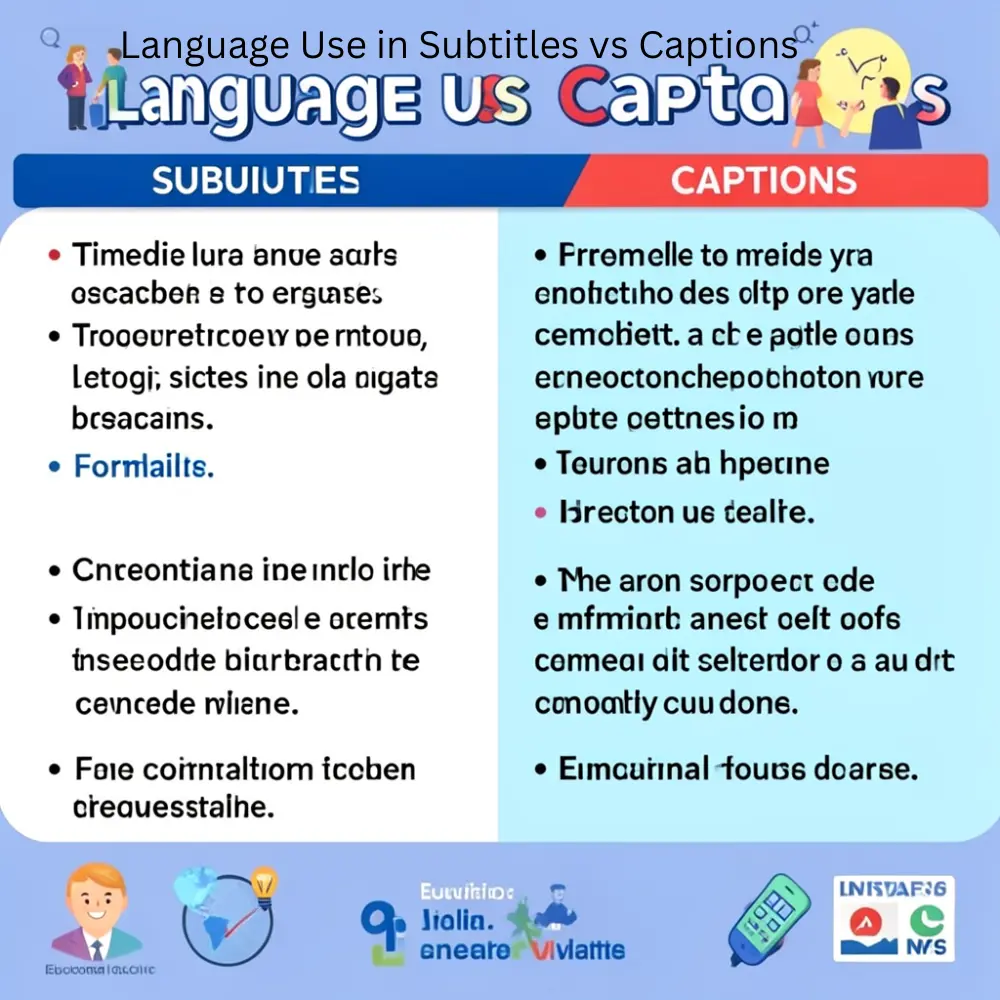
- 🌍 Subtitles translate language 🌍
- 🔤 Captions stay in the original language 🔤
- 🗣️ Subtitles assume spoken audio 🗣️
- 🎧 Captions replace audio meaning 🎧
- 📘 Subtitles may omit filler words 📘
- 🧠 Captions keep speech patterns 🧠
- ✍️ Captions often verbatim ✍️
- 🌐 Subtitles adapt culturally 🌐
- 🎯 Captions aim for accuracy 🎯
- 🔍 Subtitles focus on clarity 🔍
- 📊 Language choice affects retention 📊
- 🚀 Clear text boosts comprehension 🚀
SEO Value of Subtitles vs Captions
- 🔍 Captions improve video SEO 🔍
- 🤖 AI indexes caption text 🤖
- 🧠 Captions help search engines understand content 🧠
- 📈 Captioned videos rank higher 📈
- 🌍 Subtitles help international SEO 🌍
- 📝 Captions add keyword relevance 📝
- 🎥 Search engines read captions 🎥
- 🚀 Captions improve watch time 🚀
- 📊 Better engagement boosts rankings 📊
- 🌐 Subtitles help multilingual discovery 🌐
- 🔑 Keywords in captions matter 🔑
- 💡 SEO favors accessibility 💡
Social Media Performance: Subtitles vs Captions
- 📱 Most users watch videos muted 📱
- 🔇 Captions increase watch time 🔇
- 🎯 Captions hook attention faster 🎯
- 🌍 Subtitles expand global reach 🌍
- 📊 Captioned videos perform better 📊
- 🚀 Platforms prioritize captioned content 🚀
- 🤖 AI recommends captioned videos 🤖
- 🎥 Short-form content needs captions 🎥
- 🧠 Viewers retain more with text 🧠
- 🔤 Subtitles work for multilingual reels 🔤
- 💬 Captions support storytelling 💬
- 🔥 Engagement rises with captions 🔥
Legal & Compliance Differences in Subtitles vs Captions
- ⚖️ Captions may be legally required ⚖️
- 📜 Accessibility laws favor captions 📜
- 📺 Broadcast content requires captions 📺
- 🏫 Educational content needs captions 🏫
- 🏢 Businesses risk penalties without captions 🏢
- 🌍 Subtitles are rarely mandated 🌍
- ♿ Captions meet compliance standards ♿
- 🧾 Regulations vary by region 🧾
- 🎯 Captions reduce legal risk 🎯
- 🤍 Inclusive design meets standards 🤍
- 📊 Compliance builds credibility 📊
- 🚀 Safer to caption by default 🚀
User Experience Differences in Subtitles vs Captions
- 👀 Captions support silent viewing 👀
- 🎧 Subtitles assume sound 🎧
- 🧠 Captions reduce cognitive load 🧠
- 📖 Easy reading improves flow 📖
- 🌍 Subtitles help non-native users 🌍
- 🤍 Captions feel inclusive 🤍
- 🔍 Clear text keeps viewers longer 🔍
- 🎥 Captions support multitasking 🎥
- 🚀 Better UX = better metrics 🚀
- 📊 Retention improves with captions 📊
- 💬 Context matters more than translation 💬
- ✨ Experience shapes loyalty ✨
Content Type Guide: Subtitles vs Captions
- 🎥 Tutorials need captions 🎥
- 🎓 Courses require captions 🎓
- 🌍 Films benefit from subtitles 🌍
- 📱 Social videos need captions 📱
- 📰 News content needs captions 📰
- 🎮 Gaming content benefits from captions 🎮
- 🎬 Movies often use subtitles 🎬
- 📊 Marketing videos need captions 📊
- 🎤 Podcasts need captions 🎤
- 🌐 Global brands use both 🌐
- 🧠 Educational content favors captions 🧠
- 🚀 Strategy defines choice 🚀
AI & Search Engine Understanding in Subtitles vs Captions
- 🤖 AI reads captions more deeply 🤖
- 🧠 Captions provide context clues 🧠
- 📊 AI favors structured text 📊
- 🔍 Captions improve answer engine results 🔍
- 🌍 Subtitles help multilingual AI indexing 🌍
- 🚀 Captions support generative summaries 🚀
- 📝 Text improves content extraction 📝
- 🎯 AI prefers descriptive captions 🎯
- 📈 Better understanding boosts visibility 📈
- 🤍 Accessibility aligns with AI goals 🤍
- 🔑 Semantic clarity matters 🔑
- 🌐 Captions future-proof content 🌐
Cost & Production Differences in Subtitles vs Captions
- 💰 Captions cost slightly more 💰
- 🧠 Captions require audio description 🧠
- 🌍 Subtitles require translation 🌍
- ⏱️ Captions take more time ⏱️
- 🎯 Accuracy matters for captions 🎯
- 📝 Subtitles focus on dialogue 📝
- 📊 Automated tools help both 📊
- 🚀 Quality beats speed 🚀
- 💡 Captions offer higher ROI 💡
- 🔍 Errors hurt credibility 🔍
- 🤖 AI tools assist creation 🤖
- ✨ Invest in clarity ✨
2026 Best Practices for Subtitles vs Captions
- 🚀 Caption by default 🚀
- 🌍 Add subtitles for global reach 🌍
- 🤖 Optimize captions for AI search 🤖
- 📊 Use keywords naturally 📊
- 🎯 Keep captions readable 🎯
- 📱 Design for mobile viewers 📱
- ♿ Prioritize accessibility ♿
- 🔍 Test engagement metrics 🔍
- 🧠 Think user-first, not tool-first 🧠
- 🌐 Plan multilingual strategy 🌐
- ✨ Quality text matters ✨
- 📈 Future-proof video content 📈
Q&A: Subtitles vs Captions
Q1: Are subtitles and captions the same?
No. Captions include audio context; subtitles focus on translation.
Q2: Do captions help SEO?
Yes—captions significantly improve video SEO.
Q3: Are captions required by law?
In many cases, yes—especially for public and educational content.
Q4: Can I use both subtitles and captions?
Yes—and it’s recommended for global content.
Q5: Do captions improve engagement?
Absolutely. Captioned videos retain viewers longer.
Q6: Which is better for AI search?
Captions, because they provide richer context.
Expert Tip: How to Choose Between Subtitles vs Captions
- Start with captions for accessibility
- Add subtitles for international audiences
- Prioritize clarity over automation
- Edit for readability, not speed
- Think long-term visibility in 2026
Conclusion
Understanding subtitles vs captions is about more than terminology it’s about reach, inclusion, performance, and future-proofing your content.
In 2026, captions are no longer optional; they are essential for accessibility user experience. Subtitles, meanwhile, unlock global audiences and multilingual growth.
The smartest strategy? Use captions by default and subtitles strategically.
That combination ensures your videos are inclusive, discoverable, and ready for both human viewers and AI systems. 🎥✨