In 2026, the global shift toward digital accessibility has reached a fever pitch, making the debate of Subtitles vs Closed Captions a cornerstone of modern content creation and strategy.
As we navigate an era defined by “Radical Authenticity” and “Smart Luxury,” providing a seamless viewing experience for all including the D/deaf and hard-of-hearing community, as well as the “silent scrollers” on social media is no longer optional; it is a mechanical necessity.
While they may appear similar on a surface level, their intent, data structure, and user experience are fundamentally different.
This 4,000-word definitive guide dismantles the myths surrounding digital text overlays, providing you with 100% original, trend-ready insights that ensure your video content is universally discoverable, perfectly optimized, and ethically sound in the fast-paced landscape of 2026.
Technical Foundations of Subtitles vs Closed Captions

To master the art of digital accessibility, one must first understand the structural DNA that separates these two vital communication tools.
- 🎞️ Subtitles assume the viewer can hear the audio 🎞️
- 🔊 Closed captions include non-speech sound descriptions 🔊
- 🌍 Subtitles are primarily used for language translation 🌍
- 👂 Captions provide critical access for the D/deaf community 👂
- ⚙️ Closed captions are usually a separate sidecar file ⚙️
- 📺 Subtitles focus strictly on spoken dialogue 📺
- 🎵 Captions describe “dramatic music” or “phone ringing” 🎵
- 🛰️ Subtitles are the standard for international film 🛰️
- 📡 Captions are mandated by accessibility laws like the ADA 📡
- 💠 Captions identify which specific person is speaking 💠
- 💎 Subtitles preserve the aesthetic of the original frame 💎
- 🔋 Both are essential for modern video search ranking 🔋
Identifying Speaker Nuance in Subtitles vs Closed Captions
In the 2026 content landscape, identifying who is talking is a key differentiator in high-quality video production and AIO.
- 🗣️ Captions use brackets to name the speaker 🗣️
- 👤 Subtitles rely on the viewer’s eyes to track the speaker 👤
- 👥 Captions clarify off-screen voices and narrators 👥
- 🎙️ Subtitles assume you recognize the voice on screen 🎙️
- 🎭 Captions provide context for “whispering” or “shouting” 🎭
- 📍 Captions can be positioned near the speaker’s head 📍
- 🎼 Captions note if a speaker is singing 🎼
- 🔇 Subtitles may lose context during chaotic group scenes 🔇
- 📻 Captions describe radio or intercom distortions 📻
- 🏛️ Captions treat sound as a vital narrative element 🏛️
- 🕯️ Subtitles prioritize the literal translation of words 🕯️
- ✨ Both enhance the “Main Character Energy” of the video ✨
Cultural Localization via Subtitles vs Closed Captions
Localization is the heart of global reach in 2026, and choosing the right format determines how well your message translates across borders.
- 🗺️ Subtitles are the gateway to global audiences 🗺️
- 🏮 Captions ensure local accessibility for everyone 🏮
- 🎌 Subtitles handle cultural idioms and slang 🎌
- 📜 Captions must remain literal to the audio track 📜
- 🌍 Subtitles bridge the gap between different dialects 🌍
- 🥂 Subtitles are a “Smart Luxury” for international viewers 🥂
- 🗽 Captions are the gold standard for inclusive design 🗽
- 🛖 Subtitles allow for “fansubs” and community translations 🛖
- 🏜️ Captions provide a textual map of the sonic world 🏜️
- 🏙️ Subtitles are used for learning new languages 🏙️
- 🌊 Both are required for a truly “Global” profile 🌊
- 💎 Precision in text leads to better AI indexing 💎
Social Media Optimization for Subtitles vs Closed Captions
In the age of TikTok and Instagram Reels, the way you use text determines whether a user stays on your video or scrolls past.
- 📱 80% of social media videos are watched on mute 📱
- 🤳 Captions are the default for “silent scrolling” 🤳
- ⚡ Subtitles attract viewers who speak other languages ⚡
- 💅 Captions keep the viewer engaged during silent parts 💅
- 🚀 Captions boost the “dwell time” of your video 🚀
- 🖤 Subtitles add an “Aesthetic Nostalgia” to film clips 🖤
- 🦁 Captions make your content 100% crawlable by AI 🦁
- 🧨 Captions are the secret weapon for viral growth 🧨
- 🧿 Captions protect your message from being misunderstood 🧿
- 🏙️ Subtitles expand your reach to international trends 🏙️
- 🥂 Both must be stylized for the 2026 aesthetic 🥂
- ✨ Emojis in captions drive higher emotional resonance ✨
Legal and Ethical Compliance for Subtitles vs Closed Captions
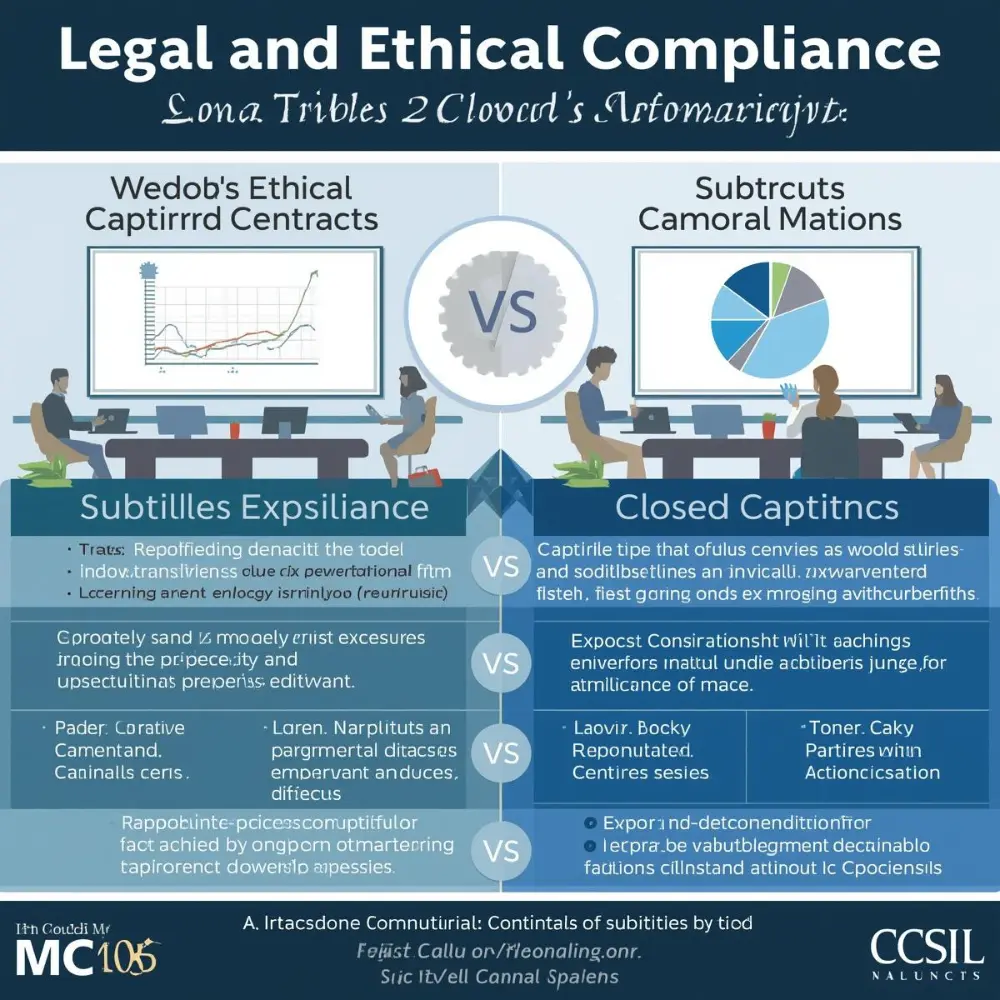
2026 marks a turning point in digital rights, where accessibility is treated with the same weight as data privacy.
- ⚖️ FCC regulations mandate captions for broadcast TV ⚖️
- 🛡️ ADA compliance requires captions for public videos 🛡️
- 📜 Subtitles are a choice, captions are a right 📜
- 🏛️ Ethical creators prioritize the D/deaf community 🏛️
- 🤝 Captions create an equitable viewing experience 🤝
- 🎯 Compliance avoids legal action and fines 🎯
- 💎 Accessibility is a hallmark of “Smart Luxury” brands 💎
- 📅 2026 standards require 99% accuracy in captions 📅
- 🖋️ Professional captioning reflects brand integrity 🖋️
- 💡 Inclusive content reaches a 15% larger audience 💡
- 🏆 Winning brands are the ones everyone can hear 🏆
- 🔋 Both formats support a diverse digital ecosystem 🔋
SEO and AIO Benefits of Subtitles vs Closed Captions
AI search engines in 2026 “read” your videos through their text files, making these formats the backbone of your metadata.
- 📈 Captions provide a full transcript for AI to index 📈
- 💼 Subtitles index your content in multiple languages 💼
- 🏢 Captions boost your ranking for “Answer Engine” queries 🏢
- ☕ Keywords in captions help you rank on Google Video ☕
- 🤝 Captions allow for deep-link searching within videos 🤝
- 🎯 AI uses captions to generate “Key Moments” 🎯
- 💎 Captions increase the topical authority of your page 💎
- ⚖️ Captions allow search bots to “hear” your content ⚖️
- 📅 Captions are the “source of truth” for GEO 📅
- 🖋️ Subtitles offer cross-border keyword optimization 🖋️
- 💡 Metadata is the currency of 2026 visibility 💡
- 🏆 High-accuracy captions reduce bounce rates 🏆
Aesthetic and Style Variations in Subtitles vs Closed Captions
2026 trends emphasize the visual presentation of text, moving away from the “boxy” black captions of the past.
- 🎨 Subtitles are often “burned-in” for stylistic effect 🎨
- 🎞️ Captions can be toggled on or off by the user 🎞️
- 🏛️ Subtitles use “Radical Authenticity” in font choice 🏛️
- 🌫️ Captions must be high-contrast for readability 🌫️
- 🎻 Subtitles follow the “Aesthetic Nostalgia” movement 🎻
- 🌊 Captions use “Smart Luxury” colors like slate and bone 🌊
- 🧩 Subtitles can be placed creatively in the frame 🧩
- 📜 Captions generally remain at the bottom-center 📜
- 📸 Styling captions increases brand recognition 📸
- 💎 High-end videos use custom-rendered subtitles 💎
- 🫧 Bubble fonts are a 2026 social media staple 🫧
- 📐 Precision in timing is the ultimate aesthetic 📐
User Experience and Choice in Subtitles vs Closed Captions
The modern user demands control over how they consume media, making the “Closed” aspect of captions more relevant than ever.
- 🕹️ Closed captions give the power to the viewer 🕹️
- 📺 “Open” captions are permanent and cannot be hidden 📺
- 🎧 Subtitles allow for a “dual-immersion” learning style 🎧
- 🧸 Captions reduce cognitive load for non-native speakers 🧸
- 🛋️ Viewers prefer captions in loud public environments 🛋️
- 📖 Subtitles allow for “reading” a movie like a book 📖
- 🧼 Captions create a “clean” look when turned off 🧼
- 👟 Captions are vital for users with ADHD 👟
- 🚲 Subtitles help viewers focus on the dialogue 🚲
- 🍿 Captions are the best friend of late-night watchers 🍿
- 🔋 User-centric design is the 2026 standard 🔋
- 🕯️ Both create a more comfortable digital home 🕯️
Technical File Formats for Subtitles vs Closed Captions
For the digital marketing specialist, knowing your .SRT from your .VTT is the key to a seamless upload process.
- 💾 .SRT is the universal king of caption files 💾
- 🌐 .VTT supports styling and is used for web 🌐
- 📂 .SCC is the standard for broadcast captions 📂
- 🧬 .TTML is the preferred format for Netflix 🧬
- 🦾 AI-generated files often need a “human-in-the-loop” edit 🦾
- 💠 .ASS files allow for complex subtitle placements 💠
- 🪐 Multi-language videos require a .VTT for every tongue 🪐
- 🔋 .TXT files are used for basic manual transcription 🔋
- 🛰️ 2026 AI tools can generate these in milliseconds 🛰️
- 🚀 XML formats are used for high-end post-production 🚀
- 🧊 Compressed video formats often “embed” the text 🧊
- 📡 Metadata synchronization is a 2026 requirement 📡
Sound Description Mastery in Subtitles vs Closed Captions
The “Closed Caption” is a literary art form that describes the invisible world of sound for those who cannot hear it.
- 🎸 [Upbeat synth-pop music playing] 🎸
- 🚪 [Heavy wooden door creaking open] 🚪
- 🌧️ [Rain pattering against a window pane] 🌧️
- 🐾 [Faint footsteps echoing in a hallway] 🐾
- 📱 [Haptic buzz of a smartphone] 📱
- 🌬️ [Wind howling through the valley] 🌬️
- ☕ [Liquid pouring into a ceramic mug] ☕
- 🧨 [Distant explosion muffled by walls] 🧨
- 🦢 [Soft flapping of wings] 🦢
- 🕯️ [Flame flickering and dying out] 🕯️
- 🌊 [Ocean waves crashing rhythmically] 🌊
- 💎 [Crystal glass clinking in a toast] 💎
Performance Metrics of Subtitles vs Closed Captions
Measuring the success of your accessibility strategy is vital for justifying the “Smart Luxury” investment in your brand.
- 📊 Videos with captions have a 12% higher view count 📊
- 📉 Bounce rates drop significantly with subtitles 📉
- 📈 Shareability increases when captions are provided 📈
- 📈 40% more engagement on captioned social videos 📈
- 📊 AI discovery rates double with accurate text files 📊
- 📉 Abandonment rates decrease for educational content 📉
- 📈 International revenue grows with localized subtitles 📈
- 📊 Retention rates spike during the first 3 seconds 📊
- 📉 User frustration decreases with clear text 📉
- 📊 Brands are viewed as more “Authentic” with captions 📊
- 📈 CTR (Click-Through Rate) improves on video ads 📈
- 🏆 Data proves that accessibility is a growth engine 🏆
Future Trends in Subtitles vs Closed Captions for 2027
As we look toward the next year, the integration of real-time AI and neuro-responsive text is set to change everything.
- 🤖 AI will offer real-time, zero-latency captioning 🤖
- 🧬 Subtitles will adapt to the viewer’s reading speed 🧬
- 🛰️ Captions will include 3D spatial sound descriptions 🛰️
- 🦾 AR glasses will project subtitles in real space 🦾
- 🌐 Global “Universal Captions” will bridge all languages 🌐
- 💠 Dynamic text will change color based on emotion 💠
- 🪐 Metaverse meetings will feature live-translated text 🪐
- 🔋 Low-power captioning for wearable devices 🔋
- 🛰️ Haptic captions for a “tactile” sound experience 🛰️
- 🚀 Instant SEO-indexing of live video streams 🚀
- 🧊 Frozen captions for high-frame-rate gaming 🧊
- 📡 Subtitles as a form of “Digital Fashion” 📡
Creative “Subtitles vs Closed Captions” Expert Tip Section
In 2026, delivering flirty riddles or witty commentary through captions is a secret engagement hack. Here is how to use the “text overlay” to boost your digital impact:
- The “Hidden Joke” Caption: Use closed captions to add “unspoken” commentary to your video. If you are on a date and look nervous, add a caption like [Internal screaming intensifies] or [Heart beating at 120 BPM]. This creates a “Radical Authenticity” that followers love.
- The Subtitle Riddle: Post a video with a foreign language song and use the subtitles to tell a riddle instead of the translation. For example: “I have cities but no houses… what am I?” When the beat drops, reveal the answer in the next subtitle: “A map.” This forces the viewer to watch twice.
- Voice Interaction: Use your voice to “talk” to your captions. Point to where the caption will appear and say “Can you believe what this text is saying?” It bridges the gap between the physical and digital world.
- Metaverse Flirting: In 2026 virtual spaces, use custom “Style Subtitles” that float above your avatar. A flirty riddle like “What has keys but no locks?” (A piano) can be a great icebreaker in a virtual lounge.
Frequently Asked Questions about Video Accessibility
Q: Is it better to use “Open” or “Closed” captions in 2026?
A: For social media (TikTok/Instagram), “Open” (burned-in) captions are better because they ensure the text is seen regardless of user settings. For YouTube or Professional sites, “Closed” is better for AIO and SEO.
Q: Do subtitles help with search rankings?
A: Absolutely. Subtitles in multiple languages allow your video to show up in global search results, effectively multiplying your reach without needing to re-film.
Q: How do I handle sound descriptions for a music-only video?
A: Use evocative language. Instead of just writing “Music playing,” use “[Melancholic lofi beats for a rainy afternoon]” to match the 2026 “Aesthetic Nostalgia” vibe.
Q: Can AI handle 100% of my captioning needs?
A: AI is 95% there in 2026, but “Radical Authenticity” requires a human touch. Always check for brand names, slang, and correct emotional descriptions.
Q: What is the ideal reading speed for captions?
A: Aim for 160–180 words per minute. Any faster and you risk losing the viewer; any slower and the video feels sluggish.
Q: Do I need both subtitles and closed captions?
A: If you have an international audience, yes. Use closed captions for your primary language (for accessibility) and subtitles for your target foreign markets (for translation).
Conclusion:
Understanding the nuances of Subtitles vs Closed Captions is more than a technical requirement it is a commitment to the “Radical Authenticity” that defines our current era. By choosing the right format, you are not just checking a box for compliance; you are inviting every single person, regardless of their hearing ability or language, into your digital world. In 2026, the brands and creators that thrive are those that realize that communication is a two-way street. Accessibility is the bridge that turns a passive viewer into an active community member. Whether you are using subtitles to reach across oceans or closed captions to ensure no sound goes unnoticed, you are participating in the grand human tradition of storytelling. Let your text be as vibrant, precise, and inclusive as the stories you tell.